
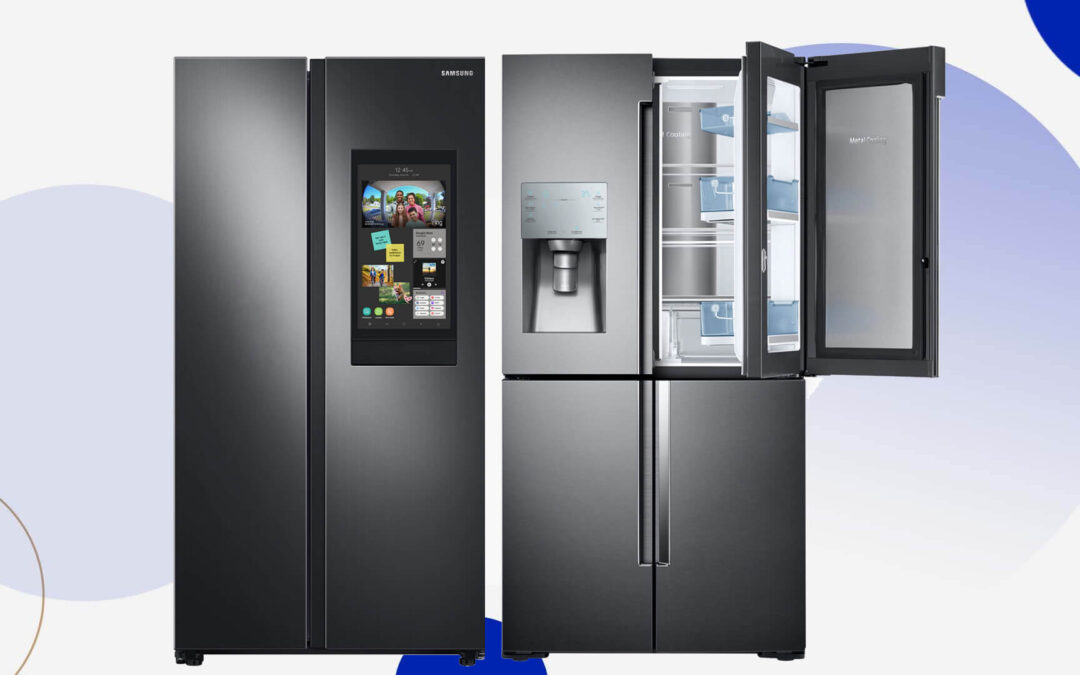
In today’s age, refrigerators are indispensable appliances. They allow homeowners to store food and other groceries and keep them fresh for days, even weeks. You can’t imagine a home without refrigerators. That is why having basic knowledge of troubleshooting refrigerator problems is important.
Sometimes, problems can be resolved through simple troubleshooting steps, saving you money from costly repairs. So if you have a Samsung refrigerator, you are in the right place. Here are some common Samsung refrigerator problems and how to troubleshoot them.
Not Cooling
Understanding the problem is easy if you know how a refrigerator works. A fridge uses a compressor to circulate refrigerant gas and removes heat from the air through condensation and evaporation. This cooled air travels to the freezer and the other compartments via an air vent.
Because the cooling process is complex, the possibility of experiencing problems along the way is greatly increased. If one component stops working, the entire fridge fails. So if your refrigerator suddenly stops working, check from the compressor to the air vents.
Troubleshooting: Check the compressor and the condenser, usually located at the back of the fridge. These components should produce a subtle buzzing sound to know they are running. The condenser and evaporator coils shouldn’t have bends that can obstruct refrigerant gas flow.
If the coils are dusty, wipe them off with a clean rag. Once all outside components are considered, check that the air vents inside the fridge are not obstructed.
Thermostat Failure
If your fridge is cooling, but you can’t control the temperature according to your preference, the thermostat might be faulty. The thermostat is responsible for adjusting the temperature according to your input. If it is shorted out or is busted, it won’t be able to detect your input.
The thermostat in your fridge runs 24/7 daily. Unlike that motor that can rest when the optimum temperature is reached, the thermostat continues to do its job around the clock. Over time, it wears out, and its functionality deteriorates.
Troubleshooting: The only way to fix a faulty thermostat is to replace it. However, you can try power cycling your fridge by turning it off and unplugging it from the power source. After about five minutes, plug it back in and turn it on. If the problem persists, call a professional immediately.
Leaking
There are several causes of a refrigerator leak. It can be due to a clogged drain. The drain is connected to the drain pan where water is collected. Food particles or trash can clog the drain and cause your fridge to leak.
A leak can also be caused by excessive condensation. Condensation happens when outside air combines with cooled air inside the fridge. This process creates excessive moisture that drips out of the fridge. A damaged door gasket is often the culprit for too much condensation.
A faulty ice maker might be dumping excess water, causing your fridge to leak. Whatever the cause of the leak, you need to fix it immediately, as it can cause extensive damage to your fridge and floor.
Troubleshooting:
- Check the drain for clogs. You can carefully snake it using a thin wire to remove stubborn clogs.
- For excessive condensation, ensure that the door securely closes. If the door gasket is damaged, replace it with a gasket for the same fridge model.
- If the ice maker is the problem, check the compressor and coils.
Noisy Fan
Refrigerators use fans to promote airflow and circulate cooled air. However, these fans can become problematic, considering they are moving parts. They will eventually produce an annoying clunky noise.
Troubleshooting: Ensure that your fridge is resting on level ground. Due to gravity, the fan can bump around when the fridge is not level. Also, check if the fan is worn-out. In this case, replace it. You can call Samsung Repairs for genuine fridge parts.
Over-Freezing
Over-freezing is when you find too much ice in your fridge. It can be difficult to remove food items when they have frozen in place. Forcibly breaking and removing inches of ice can also damage your freezer.
Troubleshooting: Adjust your thermostat by increasing the temperature a bit. Check also that the air vent is not obstructed.
If any of the troubleshooting steps in this guide don’t fix the problem, a more serious underlying issue might be causing your fridge to fail. Call a professional to accurately identify the problem and fix it.
You can contact our expert technicians anytime or use our contact form to schedule an appointment. Don’t wait for your Samsung refrigerator problems to worsen when our Samsung refrigerator repair service is just a call away.